How to Get Found in ChatGPT and AI Assistants
TRENDING TOPICS
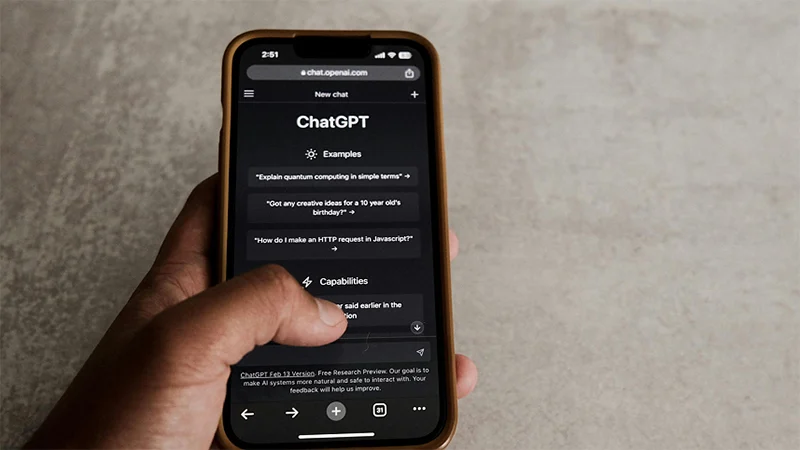
Something has quietly shifted in how people find businesses. A growing number of your potential customers are no longer opening Google and scrolling through a list of links. They’re typing a question into ChatGPT, asking Gemini for a recommendation, or letting Perplexity research options for them — and getting a single, synthesized answer back.
If your business isn’t mentioned in that answer, you’re invisible to them. Not buried on page two. Invisible.
The good news: this is a solvable problem. Here’s exactly what you need to do.
First, Understand How AI Assistants Find Businesses
Each AI platform pulls information differently, which means your strategy needs to cover multiple bases.
ChatGPT uses a Bing-powered retrieval layer when browsing the web. Bing search rankings are the closest proxy for whether ChatGPT will find you. It also weights Wikipedia, major directories, news sites, and authoritative third-party mentions heavily.
Google’s AI Overviews and Gemini are built on Google’s index. Strong traditional Google SEO, E-E-A-T signals, and schema markup are the primary levers here. About 52 percent of Gemini citations come directly from brand websites.
Perplexity does live retrieval on every query. It favors fresh, well-structured content that cites sources and includes data. Think of it like an AI-powered research assistant — it wants content written with the rigor of a good article, not a sales page.
The foundational steps that move the needle are largely the same across all platforms — which makes this very actionable.
Step 1: Get Indexed in Bing — Don’t Skip This
Most small businesses focus exclusively on Google and completely ignore Bing. That’s a significant missed opportunity — especially now that ChatGPT, the most widely used AI assistant, uses Bing’s index as its primary web retrieval source.
Go to Bing Webmaster Tools (webmaster.bing.com), claim your site, and submit your sitemap. Fix any indexation errors Bing flags. This single step can dramatically improve your ChatGPT visibility and costs nothing but a few minutes of your time.
Step 2: Build a Consistent, Complete Business Entity Online
AI systems build their understanding of your business from dozens of signals across the web. Inconsistency confuses them — and confused AI systems simply don’t recommend you.
Your name, address, and phone number (NAP) need to match exactly across every place your business appears: your website, Google Business Profile, Bing Places, Apple Business Connect, Yelp, Facebook, LinkedIn, and local directories. Even small differences — “Suite 6” vs. “#6” — can create enough ambiguity that AI systems lose confidence in your listing.
Aim for at least 30 consistent directory listings. The highest-priority ones for AI visibility are Google Business Profile, Bing Places, Apple Business Connect, Facebook, LinkedIn, and the Better Business Bureau.
Step 3: Structure Your Content to Answer Real Questions
AI assistants are answer machines. They’re looking for content that directly, clearly, and confidently answers the questions their users are asking.
The content that gets cited most frequently shares a few characteristics:
- It answers a specific question in the first paragraph. Don’t bury the answer after three paragraphs of context. Lead with the answer, then expand.
- It uses questions as headings. “Do you build WordPress websites?” is a better H2 than “Our WordPress Services.” The question format matches exactly how people prompt AI assistants.
- It’s specific, not vague. “We serve Cave Creek, Carefree, North Scottsdale, Phoenix, and surrounding Arizona communities” is citeable. “We serve the Phoenix area” is not specific enough.
- It’s readable prose with clear structure. Short paragraphs, descriptive headings, and plain language work for both human readers and AI systems.
A robust FAQ section is one of the most powerful tools you have. Write it with the actual questions your customers ask — not the questions you wish they asked.
Step 4: Implement Schema Markup
Schema markup is the structured data layer that tells AI systems — explicitly, in machine-readable code — exactly who your business is, what you offer, where you are, and what your customers say about you.
For AI visibility, the most impactful schema types are LocalBusiness (with your address, phone, hours, and service area), FAQPage (matching your visible Q&A content), Service (one entry per major service), and AggregateRating (if you have visible reviews on your page).
The sameAs array in your LocalBusiness schema is particularly important for AI. It links your website to your social profiles and other authoritative presences — helping AI systems connect all the signals about your business into one confident entity picture.
Step 5: Earn Third-Party Mentions
Your own website is one signal. What other websites say about you is a different — and often more powerful — signal for AI citation. AI systems are designed to weight third-party sources more heavily than a business’s own claims.
Ways to build third-party mentions that help AI visibility:
- Local news and community sites — Cave Creek, Carefree, and Scottsdale publications, neighborhood blogs, event coverage
- Chamber of commerce listings — Carefree Cave Creek Chamber, Scottsdale Chamber of Commerce
- Industry directories — Clutch.co, UpCity, local business databases
- Client websites — if your clients mention or link to you, those are valuable mentions
- Guest articles or interviews — being quoted as a local expert in relevant publications
Step 6: Add an llms.txt File
The llms.txt file is an emerging standard — a simple text file placed at your website’s root that tells AI crawlers what your business does, what pages exist, and what content is available to reference. Think of it as a table of contents written specifically for AI systems.
No major AI provider has officially committed to reading llms.txt yet, but adoption is growing rapidly and Google included it in their Agent2Agent protocol in early 2025. Early adopters are already positioned ahead of competitors who haven’t set it up yet.
Step 7: Keep Content Fresh
AI systems — especially Perplexity and ChatGPT with web browsing — favor content that’s current. A post published recently outcompetes a post from 2022 on the same topic, all else being equal.
You don’t need to blog daily. Publishing one high-quality post per month — answering a real question your customers ask, written clearly with proper headings — compounds over time into a meaningful body of citable content.
Quick Checklist
- ☐ Submitted to Bing Webmaster Tools with sitemap
- ☐ Google Business Profile claimed and fully completed
- ☐ Bing Places and Apple Business Connect claimed
- ☐ NAP identical across 30+ directory listings
- ☐ LocalBusiness schema on homepage (with sameAs links)
- ☐ FAQPage schema matching visible Q&A content
- ☐ Service schema for each major service
- ☐ Robust FAQ section with real customer questions
- ☐ Content headings written as questions where relevant
- ☐ llms.txt file at website root
- ☐ Publishing fresh, helpful content monthly
We Help Small Businesses Get Found — in Google and in AI
AI search visibility is something we build into every website we design and every SEO engagement we take on. We serve small businesses and nonprofits throughout Cave Creek, Carefree, Scottsdale, Phoenix, Fountain Hills, Paradise Valley, and surrounding Arizona communities.
If you’d like to know where your business currently shows up — or doesn’t — in ChatGPT, Gemini, and Perplexity, and what it would take to change that, we’re happy to take a look.